Migraines in Kids and Teens
Migraine Headache in Children and Adolescents
Do children get headaches?
Yes. About four out of five children sometimes have a headache. The most common cause is a viral infection such as a cold or the flu. Children and adolescents can also get tension-type headaches and migraine headaches. Brain tumors can cause headaches, but these tumors are very rare. In addition to a headache, brain tumors almost always cause problems with coordination, balance, speech, sight and walking.
What is a migraine headache?
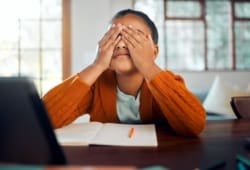
A migraine is usually an intense pounding headache with nausea that occurs from time to time. The pounding or pulsing pain usually begins in the forehead, the side of the head or around the eyes. The headache gradually gets worse. Just about any movement or activity seems to make it hurt more. Nausea and vomiting are common. Bright lights or loud noises make the headache worse. The headache can last for two hours or even up to two or three days.
Some people see a pattern of lines or shadows in front of their eyes as the headache is beginning. This is called a "warning aura." Most people with migraine do not have this.
Do many children get migraine headaches?
As many as 5 percent of children in grade school have migraine headaches. During the high school years, about 20 percent of adolescents get migraine headaches. These headaches are more common in girls than in boys. Boys who get migraines have them more often when they are about 10 to 12 years old. It is not unusual for them to have two to three migraine headaches a week.
How do children describe their migraine headaches?
- "It feels like my heart is pounding in my head."
- "All I want to do is throw up."
- "It is like being inside a big bass drum."
- "I just want to go into a dark room and lie down."
What causes migraines?
Migraine headaches seem to be caused in part by changes in the level of a body chemical called serotonin. Serotonin plays many roles in the body, and it can have an effect on the blood vessels. When serotonin levels are high, blood vessels constrict (shrink). When serotonin levels fall, the blood vessels dilate (swell). This swelling can cause pain or other problems.
Certain things that can set off migraines include the following:
- Strong or unusual odors, bright lights or loud noises
- Changes in weather or altitude
- Being tired, stressed or depressed
- Changes in sleeping patterns or sleeping time
- Certain foods (see the list below), especially those that contain tyramine, sodium nitrate or phenylalanine
- Missing meals or fasting
- Menstrual periods or hormones
- Intense physical activity
Foods that may trigger migraines
- Aged, canned, cured or processed meat, including bologna, game, ham, herring, hot dogs, pepperoni and sausage
- Aged cheese
- Aspartame
- Avocados
- Beans, including pole, broad, lima, Italian, navy, pinto and garbanzo
- Brewer's yeast, including fresh yeast coffee cake, donuts and sourdough bread
- Caffeine (in excess)
- Canned soup or bouillon cubes
- Chocolate, cocoa and carob
- Cultured dairy products, such as buttermilk and sour cream
- Figs
- Lentils
- Meat tenderizer
- Monosodium glutamate (MSG)
- Nuts and peanut butter
- Onions, except small amounts for flavoring
- Papaya
- Passion fruit
- Pea pods
- Pickled, preserved or marinated foods, such as olives and pickles, and some snack foods
- Raisins
- Red plums
- Sauerkraut
- Seasoned salt
- Snow peas
- Soy sauce
How is migraine diagnosed?
Your doctor can diagnose migraines on the basis of the symptoms your child describes. This is called the medical history. After taking the medical history, your doctor will perform a physical exam. Your doctor may also want to do blood tests or imaging tests, such as an MRI or CAT scan of the brain, to be sure that there are no other causes for the headache. Your child may also be asked to keep a "headache diary" that will help your doctor identify any "triggers" for your child's migraines.
What can help a migraine?
When a migraine headache happens, your child should go to a cool, dark place and lie down with a wet cloth across his or her forehead. If the doctor has given your child a medicine for migraines, your child should take it as soon as he or she knows a headache is starting. Don't wait! If your child feels nausea, the doctor can also prescribe a medicine for that.
How can my child keep from having migraine headaches?
While there are no sure ways to keep from having migraine headaches, here are some things that may help:
- Eat regularly and do not skip meals.
- Keep a regular sleep schedule.
- Exercise regularly.
- Look for things that might trigger an attack, like certain foods, stress, too much exercise or physical activity, certain activities or stress. Sometimes, life stresses are a trigger. Many psychologists can teach stress management and/or biofeedback to help your child manage stress.
- Look for foods that might trigger an attack, like cheese, processed meats, chocolate, caffeine, MSG (a preservative in many foods), nuts or pickles. About one third of people with migraine can identify food triggers. Your child only needs to avoid eating these foods if one of them triggers headaches.
If your child has frequent migraine headaches, your doctor may prescribe a daily preventive medicine to try to make the headaches less frequent and less severe.
More Information
Other Organizations
-
American Council for Headache Education
19 Mantua Rd.
Mt. Royal, NJ 08061
856-423-0258
-
National Headache Foundation
428 W. St. James Place, 2nd Floor
Chicago, Ill. 60614-2750
888-NHF-5552
-
Revolution Health Migraine Community
Source
Written by familydoctor.org editorial staff.
Headaches in Children and Adolescents by DW Lewis, M.D. (American Family Physician February 15, 2002, http://www.aafp.org/afp/20020215/625.html)
Reviewed/Updated: 06/06
Created: 07/03